Episode Transcript
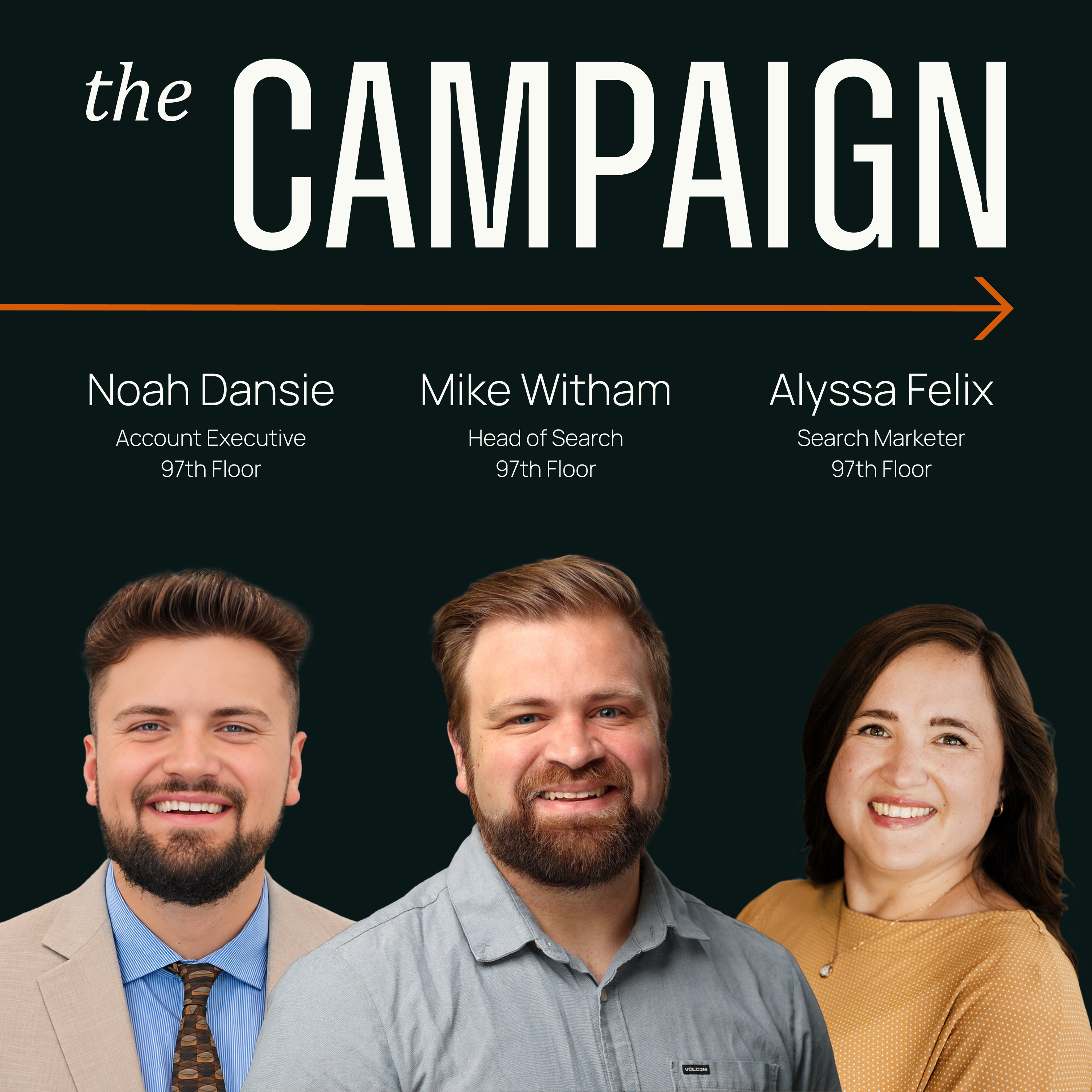
[00:00:00] Speaker A: Hello, everyone. I'm Mike Witham, head of search marketing at 97th floor, and this is the campaign.
Today. I sat down with Alyssa Felix, a search marketer, and Noah Dansey, our account executive, and we talked. Everything we took away from Bryton SEO, we discussed what industry experts are talking about with schema, markup, attribution, and everything changing in AI search. Let's dive in. All right, guys. So, Brian, SEO. So full, like, three weeks ago now.
[00:00:31] Speaker B: It feels like a lifetime ago.
[00:00:33] Speaker A: Wild. It's just crazy how fast the industry is moving in every regard. We all kind of have different roles at 97th floor and different contributions to our clients. And so I think it's going to be an interesting conversation today to talk about how we plan on taking our major takeaways back to our work and how we're trying to progress our product of AI search and search optimization in general and how we're moving that forward. So, Alyssa, you want to kick us off?
[00:01:05] Speaker B: Yeah. For me, one of the things that was, like, a big takeaway was how much nobody has this figured out. Everyone is still all kind of flying by the sea of their pants a little bit. Everyone, I feel like, has a little fraction of the answer, and together we're making, like, this messy hole.
[00:01:25] Speaker A: I want to go in deeper because I feel like Noah and I both have insight, and I want to hear more, expand more on your insights from that right away, and then we can still go in and talk about our stuff that we found, too. Yeah. So I really resonate with what you said about everybody's just kind of flying by the seat of their pants, figuring it out. And you go to one of these conferences and you talk to, quote, unquote, industry leaders or you hear from industry leaders, and you expect to gain something new or gain something, like, groundbreaking that you can come back and test with all of your clients. But for me, and from talking to you, Alyssa, I feel like you had a similar experience.
A lot of the value that came from going to Brighton SEO was in validation that we are either doing the right thing or that we are already ahead of the curve in a sense, where if you're supposed to go to this conference and hear from an industry leader, and we're already doing what the industry leaders are saying, that is validation of, like, okay, we. We kind of. We're on the right track. Right.
And one of those was entity mapping, and I. You wrote an entire article about entity mapping. Do you want to go into that one a little bit more?
[00:02:35] Speaker B: Yeah. So it was really funny because Maybe two months before Brighton SEO, we started really diving into entity mapping and how important and how helpful and all of that it could be. And Mike got up in company meeting and talked about Yamaha and brought that back to.
But it was like totally, totally valid, like analogy because Yamaha is a very confusing brand.
[00:03:03] Speaker A: They make pianos and dirt bikes.
[00:03:06] Speaker B: Yeah, pianos and dirt bikes. And making those connections for Yamaha is, you know, so important. And it was really great to then go to Brighton. And my favorite analogy that was used was by Grant Simmons and he talked about Homer and yeah, this was great. And how like you say Homer and people are going to think about different things. Maybe if you went and just watched the Odyssey, you're thinking Homer, the poet who wrote the Iliad and the Odyssey and was Greek.
Or maybe you're thinking Homer Simpson who eats donuts and lives in an imaginary town.
And so just in the way that entity mapping helps bring clarity to Mike's Yamaha example, providing that context for differentiating is the website I'm at Coleman Lamps with camping and all of that. Or is it Coleman Furniture who sells couches.
[00:04:03] Speaker A: That makes total sense. And like the need for that of like, of mapping an entity which is a brand or a person or even a product in some cases to a topic. So you're mapping furniture to Coleman furniture. You're mapping the topic of Homer Simpson to tv, the TV and sitcoms or television networks. You know, like there's, there's all sorts of different topics that you can map an entity to. And it's so important to give that context to LLMs in any way we can. And we were already going full force into it and, and agency wide, testing it and testing different ways that we can do it and giving those context layers that Garrett was, Garrett Grant talked about. Yeah. In, in his talk. So that was cool. Any other ones that like stood out as a piece of validation?
[00:05:04] Speaker B: So Anthony Mafin was one of them. But the first session that I went to was all about audience and keyword research and knowing your audience. I like remembered sitting there worried and like, I was worried because I'm like, I feel like we're already doing this. Like, did I totally just like waste company resources coming to a conference or I'm not going to learn anything. And then I was like, hold on a second though. That's the point, right? It is, it is about the validation and that, you know, know that, okay, we're doing it the right way. There isn't any any crazy method that somebody has discovered that we haven't thought of already. And so that was really helpful for me because I was, I was a little worried at first.
[00:05:48] Speaker A: I didn't thought of that. Of like, oh yeah, this was a total waste. There's nothing. I'm not going to come back with anything. Right. But, but yeah, and, and that's a really cool aspect of going to conferences too, is not just validation in the positive sense, but also in the negative sense of like, hey, I disagree with what you're saying and you're supposed to be an agency expert or an industry expert and I've seen evidence of the contrary of what you're saying and there was a little bit of that as well.
[00:06:16] Speaker B: So yeah, you. Was it you or Noah? One of you came back and we're like, somebody said something and we're like, no way.
[00:06:23] Speaker A: Yeah, somebody said that there was a negative correlation between brand sentiment across the web and sentiment on AI search. And after digging into it a little bit deeper and digging into the data that this person used for to make that statement, our initial reaction to that was spot on. Like that has no basis. There absolutely is a positive correlation between having a positive brand sentiment and reviews and across the web with how AI demonstrates your brand. So yeah. What about you, Noah? What were your top takeaways?
[00:06:59] Speaker C: I was going to say, Mike, just building off of what YouTube will said, like it was funny to get all of the industry experts opinions on some of these things and see how they differ. Like one, for example, I think entity mapping, we were really ahead because I got everyone's take on just schema as a buzzword and it was interesting to see that some folks were really like, I got some notes here. Obviously I think Martha from Schema App most definitely outlined the entity side of it and that it's more of a map and helps connect the dots on this on a site. And so I think that was really cool to see that. Like, I think she was kind of up to our standard of what we think about it. Then others were very much still treating it like as a checklist item and very much like in their presentations kind of using it as like a. Well, it doesn't actually doesn't do anything from based on what we did. But it's like, okay, I think we're missing the understanding of like what it actually serves, the purpose of it, you know. And then on measurement too, to your point, Alyssa, it was interesting to see all those interviews I did of like ask people what are you doing on. On prompt tracking? And then actually like attribution to revenue. I think our approach to measurement and attribution is like, you have to pull multiple sources because there is no one silver bullet right now of attribution and measurement. I think everyone in the industry knows right now it's not clear.
[00:08:10] Speaker A: Yeah, absolutely. The scheme as a checkbox point that you're making, I think is super interesting. And I, I feel like with AI search and its evolvement and how it's. How it's coming about, like everybody wants to grab onto something, everybody wants something tangible to go and try and test or do.
And so anytime anybody comes out with something, it was like, hey, schema markup is the thing that you need to do to get better AI search visibility.
I think schema markup is a perfect example of this, where they grabbed onto it not knowing what it was supposed to really do or how to actually use it or what types of schema to actually use and expected to see some kind of result. So they were like, let's do the basics, the org schema and we'll include that on all of our product pages or about us pages or whatever. And that's going to get us so much more visibility. And then they did it and then they didn't see any improvements. And they're like, well, yeah, schema's bull crap. Like, we don't. It doesn't do anything.
[00:09:10] Speaker B: Right. Yeah. One of the quotes from the entity mapping and I think it was also still Grant was brands don't lose out to competition necessarily in AI search. They lose out to confusion.
And Martha expounded on that words like, you know, if you. They tested, they implemented schema and they saw hallucinations stop.
And so we, not only is it, we didn't implement schema with a strategy, but it's. Were we even measuring the right thing with the schema?
[00:09:43] Speaker C: Totally. I was going to say I'm kind of jumping ahead a little bit, but I got back from Ahrefs Evolve and it's funny to see that our team's been doing such cool stuff with brand sentiment analysis way prior to all this. Then Ahrefs evolve literally yesterday, diving a ton into the confusion aspect of it's no longer the competition is does AI describe your brand in the way that it needs to be described? Right. And communicating the correct sentiment. And so I just think interesting that we've been so ahead of the curve on that too.
[00:10:07] Speaker A: Yeah, absolutely. I think everybody's point just barely illustrates what I'm trying to say of the schema. When done with intentionality and with purpose. And you know what, you're actually trying to accomplish with specific topics and for specific pages or products and subjects that you want to write about and appear for, then it can be a really useful tool. But if you're just going in because somebody told you to and go for it, it's the same. You're. You're not going to get measurable results because you don't even know what you're measuring in the first place. You know what I mean?
[00:10:39] Speaker C: Yeah.
[00:10:39] Speaker A: I think that there's like a ton that we could talk about on schema. But I want to get to your second point, Noah, which was on attribution, because you're so right. Everybody is kind of trying their best to figure out what to track and how that even equals success or failure. Right. And if what you're tracking actually matters and also, like, is it going to match what you are trying to accomplish, which is more sales? Right.
[00:11:09] Speaker C: Yeah.
[00:11:09] Speaker A: Paxton recently had Rand on this show, the campaign, and if you haven't listened to that episode, I highly recommend it. Rand has some really good points that he makes about the flaws in. In attribution as it stands now and as it always has stand. Right. And really taking us back to core marketing principles of if you do X, Y should increase. Right. And we have all these other different KPIs that we're trying to mix into that, but we don't really ever.
Those KPIs distract us from getting to the end goal, which is increasing sales and leads. Right. And so if what you're doing is increasing sales and leads or whatever you're trying to accomplish with your marketing objectives, then it's successful and you should keep doing it. And the AI search attribution conversation is so centered on, I want what we've always had in SEO. Right. Like, I want those rankings. I want those. You know, I can create a direct line from A to B with rankings and traffic. Right. And we. We just don't have that luxury anymore in a lot of ways.
[00:12:19] Speaker B: Well. And I think maybe we never really did.
[00:12:22] Speaker A: Yeah, exactly. Yeah. And that's the point Rand always is trying to make too, is that it never was actually that beautiful of a landscape.
[00:12:29] Speaker B: And marketing is always messy.
[00:12:31] Speaker C: Yeah.
[00:12:32] Speaker B: There's never perfect attribution. And one of the speakers, I think, from Semrush actually snapped out, like, some of their customer journeys and, like, they're messy. And then, then like, when you look at yourself as a consumer consumer and like, how you got to like, I just bought a car a couple months ago, right. I have been thinking about buying this exact car for like, Seven years. It's a messy, it was a messy customer journey to get to that point. And like I couldn't tell you all the touch points and I know some of them were online and through search, but so many other things influenced that decision. And so the attribution has never been perfect.
[00:13:09] Speaker C: I was going to say I'm excited for Paxton's session with WordPress VIP, our final session about attribution, like how to measure. Like I said, it's so messy. And I was thinking of an example. Lola blankets, obviously, Utah. There's the battle between Minky and Lola, the whole thing. But one of the things that got me originally was I love Laney, the band. And they did a collab with them specifically and had a billboard on i15 for it. Right. And that drove me to their side to eventually convert. And so anyways, I just think to your whole point in the billboard analogy that Paxton brings up, a lot of it says it's never as clear as we want it to be. And maybe it wasn't never that way. And it's funny that people are like trying to find that answer when really I think the answer is you have to again, multi thread pull on a lot of things. And one thing I wanted to talk about too with all of this kind of tracking, measuring topic was prompt tracking. And I will say for all the prompt tracking tools that are out there, it was interesting to see my interviews that not people like trusted them necessarily. You know, like there's a lot of tools and they're very vetted. But like the, I think the SEO experts we talked to that have been doing this a long time, like Chris Long and some others, like, they were just like, yeah, I mean those tools are there, they can help you with direction. But I don't know if I trust it completely right now because it is,
[00:14:21] Speaker B: it is synthetic data. There was one guy, he actually sat on stage, he's like, they're all the same.
[00:14:26] Speaker A: Yeah, that was crazy. Like there were two sponsors at Brighton, two types of sponsors. There were link building companies and AI prompt tracking tools. That was it. That was all the sponsors that were at Brighton SEO. And the prompt tracking tools, I have demoed almost all of them. I was actually like avoiding some of the tools, some of the booths at Brighton SEO because I was like, I totally ghosted you. You demoed this for me and I, I have not emailed you back and you've followed up seven times. But my point is they're all the same. You're exactly right. Like they all measure the Same thing. Their reporting is all very similar. We did end up making a choice at 97 floor that we're going with. And we did that based off of, like, how they report and how they set up their reporting and how they're organized, their prompts. And so it wasn't based off of, oh, they have better data than so. And so it was the way that their tool is structured, matched our flow and our processes a little bit better. And so you're. You're exactly right. Like, just go choose one. Choose one that best fits your methodology behind how you strategize and build.
And I want to bring us back to your point of audience first and how there was a whole talk on audience first messaging, right? And all this talk of we can't depend on any tool, right? Like, we can't depend on data. We don't have the direct line of correlation, whatever. But in cmos still need something to go to their board with or VPs of marketing still need something to go to their CMOS with to be able to say, hey, we should invest in this and here's proof, or here's evidence as to why I think this would be a good bet. Right? And so we still do need to make our best correlations, our best assumptions and storylines of we did this and we saw this because we did that. Right?
[00:16:21] Speaker B: And we still need evidence.
[00:16:23] Speaker A: We still need evidence, right? And I think that the brands that are going to win in AI search that are the ones that can make that argument to get more budget to invest in AI search when they can say, we have evidence that we are growing in visibility for this audience that we care about, for this Persona that we care about and we know is our buyer. And when you're setting up prompt tracking, that is the key, right?
You need a prompt set that represents that Persona, that that buyer. And when you can say, hey, we have grown invisibility for this set of prompts that are directly in line with what this Persona is talking about, then you can say, here's the evidence. We did all these optimizations, we grew invisibility, and guess what? We're growing for the product line that this Persona would buy or should be, in theory, buying.
So that's where you need to, like, be a little bit.
I don't know how to put this, but, like, be a little bit brave and say, like, scratch. Yeah, take.
[00:17:29] Speaker C: Yeah.
[00:17:29] Speaker B: And I think it's part of it is you have to be comfortable with the uncertainty.
[00:17:34] Speaker A: Yeah, exactly.
[00:17:35] Speaker B: Comfortable living in a bit of a gray area because at best, Prompt tracking is directional. It's. It's like we, like we've been talking about, it isn't a perfect attribution, but if we know our audience and we know, like, hey, I know this audience. I know this is what they're concerned about. This is their worry. This is, you know, their aspiration. And as a result, I know these are the things that they're going to be asking and searching then, and those are where we base our prompts. Then we have good directional data.
[00:18:09] Speaker A: Yeah, absolutely. And a cool example of this from our side from one of our enterprise clients that we're working on reporting for. Alyssa and I were actually in a meeting this morning discussing this where we have this very large organization that needs that evidence. That needs the evidence that their investment is working and doing the right things. And one way that we were able to do this was to say, hey, we have been optimizing for this specific product line. We have been optimizing for this specific piece of this product. And on the surface, it doesn't look like there's been much growth because you look at overall organic impressions and traffic, and it's gone down. But when we narrow into queries that contain our name and this product, we see massive increases across the board on all of these terms and all these queries. And so we can show evidence that we've been working on this specific set of prompts around this product line. And here's the evidence that that's growing in visibility.
So there are ways of doing it. It's not going to be perfect matches, but it is possible still to provide that evidence.
And I feel like we've gotten a little bit away from Brighton SEO here. But. But I do think you bringing up a good point of if we're talking about this conference as a way to gauge how the industry stands right now, that is a perfect subject to land on. Of. Nobody really has a super strong handle on attribution, but we at 97floor can confidently say we're making strides at getting to a point where it is valuable for our clients. The stories we're telling with the data,
[00:19:52] Speaker C: I was going to say too, I think for marketers, like, going forward, I think the ones who are going to be successful in their companies are the ones who are tapped into AI search. Right. Because I think to your point, Mike, it's like on our. On our side, nice floor. I think we can show the value we're providing then for someone who's doing it in house all by themselves and they're trying to Figure out how to talk about AI search field's ability to leadership and the success there. They have to get, like you said, in the gray area a little bit. And it's been interesting to hear. Like, I think it probably varies by company of like how educated their leadership is on AI search and what it is and like how the terminology they understand. But I think the marketers who do well are knowledgeable enough to know how can I communicate this leadership where I can connect the dots for them? Because before it was easy to connect the dots. Even most executives understand marketing funnels and like, you know, customer journeys. But now it's like, okay, as a marketer, how can I explain this leadership to where we're showing we are driving the value Might just want to be in that way. That was straightforward as before, right?
[00:20:45] Speaker A: Yeah, exactly.
[00:20:47] Speaker B: So all of that being said, talking a ton about validation and stuff, there were lots of things that we did learn, Mike. Yeah, there was a couple that totally blew your mind.
[00:20:59] Speaker A: Yeah, yeah, there was. I would have been happy if this individual was the keynote speaker. Brighton SEO. Like they made it worth the entire trip for me. And it was an ex Google engineer.
His name's Philly. He was awesome. He went into detail of how Google finds your site, reads your site, crawls through your site and gave reasons as to why it matters. And there were things that I never knew that he said that I was blown away by. Like for example, he gave an example of his robots Txt for someone he was working with for a site he was working on was blocked and Google couldn't actually get there and it wouldn't actually ever load for a crawler or for a bot.
And I didn't know this, but when that happens, Google actually just slowly starts to de index your entire site, which is crazy. And that was the, that was the trajectory that they were on. They were just like steady, slow disappearance from Google search. Right. And then he showed, oh, here's where, how we found it and we fixed it. And look at the, the dramatic rebound that they had after we were able to fix it. So that was really cool. But the coolest part about that talk in general was that he could have talked about anything.
He could have talked about links, he could have talked about quality of content, he could have talked about any number of on page or off page factors. But he chose to talk about how Google finds and indexes the pages on your site. And I think that's really eye opening because in the world of AI, and I'm not talking about AI search, I'M talking about AI that can generate content.
There is no limit to the amount of content that you can create about anything. And content is as easy as push of a button content. And that's never going to win. That type of content is never going to win, but you still are at this level of speed and efficiency with content production that we've never seen before.
And so then when the sky's the limit on the amount of content that you can produce at any quality, what is left? Right. And, and it's how that content gets delivered to a system and how it's given and explained and fed to bots.
And so the fact that he talked about that is really eye opening to me. And I think that every major issue I've seen with tanking of traffic or anything like that in my career I can directly draw back to Google. Can't find your site?
[00:23:52] Speaker B: Oh yeah. I had a client where traffic was terrible. They came on and they just were like bleeding traffic and like two minutes into technical site audit, their homepage was no index.
[00:24:08] Speaker A: Yeah, yeah.
[00:24:09] Speaker C: The simple technical foundation. Yeah, like foregone.
[00:24:15] Speaker B: Yeah.
[00:24:15] Speaker A: The Maslow's hierarchy of needs, there's a ton of them made for SEO and almost every single one you'll ever find is the base of it. Like the biggest bar at the bottom of the pyramid is technical SEO. And it's that for a reason. Because if you have the best content in the world that's amazing and you sell the best product ever. It doesn't matter if Google can't find, doesn't matter if bots can't read it or know where to place it or where how to index it. So anyway, that was my favorite part of the conference.
Yeah, I think we hit on like a lot of really awesome things. Anything else you guys want to chat about before we.
[00:24:53] Speaker B: JavaScript was another.
[00:24:54] Speaker A: Oh yeah.
[00:24:55] Speaker C: Yes.
[00:24:56] Speaker A: Yeah. Major, major topic. Core topic.
[00:24:59] Speaker B: Yeah, yeah. I went to one by Sam Torres. She was awesome. Fantastic. I learned so much.
Some of my key like takeaways where it's like really like if, if it's important, put it in the wrong. Which sorry the it sounds so basic but if it's, if it's that important, make sure it's in your HTML too. Don't necessarily hide it behind JavaScript.
[00:25:24] Speaker A: Yeah, exactly. Why make it harder for a bot to find it and read it. Yeah. Again going back to can a bot read and understand your site and find the information?
If the answer is no, you're not going to perform well.
[00:25:38] Speaker B: Right.
[00:25:38] Speaker A: Well, JavaScript is a key to that.
[00:25:40] Speaker C: Well, I was going to say too just building off of that again like with the brand sentiment, conversation and confusion. And I will say at Ahrefs Evolved there's a lot of conversation of like off page influence of like just getting mentioned on.
[00:25:51] Speaker A: You know it's definitely a core topic as well.
[00:25:54] Speaker C: But the thing is I feel like what you guys talking about is it's like it. You may have even great off page efforts and your and elements are picking you up and you're getting discovered. But then if someone goes to your site right. Or Google's trying to get more details about you to then because obviously there's do you show up in the competitive set and then are you chosen the competitive set by based on your features and most of those things come from your own site. Not oftentimes it's like third party references are very much like getting you in the conversation off page gets you there. But then like on page is kind of how you get differentiated which again is really important to like make sure your site's getting all the technical things done to feed the right information.
[00:26:31] Speaker B: Yeah, exactly.
[00:26:32] Speaker A: Exactly.
[00:26:33] Speaker C: Love it.
[00:26:34] Speaker A: Yeah. Off page was a big one. I think a major takeaway for me was like everybody loves to talk about off page and like the. The massive cited sites like YouTube or LinkedIn or Reddit but really what matters is where the LLM is learning and getting its information.
So go where. One line that a speaker used that really stuck out to me was that somewhere along the way in guest posting and link building we lost sight of being where the audience is.
Right. And. And that translates to LLM off page optimization where we need to be where the LLM is be where they are learning and getting their information and be mentioned there because that's the key to then be cited and mentioned.
[00:27:26] Speaker B: Yeah. One of the ones I went to, he talked about about this very in the encoding part of AI. But one of the things he brought up and I loved it because it's a good analogy and I love a good analogy. But in academic publishing there's a phenomenon called co citation similarity which is essentially when you get to a topic the same papers get cited over and over again.
[00:27:52] Speaker C: Right.
[00:27:52] Speaker B: And they mathematically were able to map that. The same thing happens with AI. And that's one of the reasons that listicles do so well in AI and we're kind of like this is the thing to do do Listicles is because of the math like so many things like link back to it. And so we want to focus on putting the content where. Where it's going to stick and where the LLM is going to go. And then that's not me saying that like go out and build a million listicles because that's not going to work.
[00:28:24] Speaker C: Right.
[00:28:24] Speaker B: But figure out where it matters and then that's where you need to be.
[00:28:29] Speaker C: That's not the same. Like it's sometimes in places you don't expect, like it might be a certain forum or review place that your audience goes that you're like, I don't really expect them like anyone to really be there, but they are and that's where all are drawing it from. So get, so be placed there.
[00:28:44] Speaker A: And guess what's so much easier to optimize for that niche forum is so much easier to get mentioned on than Reddit is ever going to be for your brand.
[00:28:55] Speaker B: Yeah, if, if your audience is on Reddit, be on Reddit. Right. That's, you know, that is important. But if, if you're just chasing like that citation that you think Reddit is going to get you, then there's no point in the effort. Yeah, Reddit is hard.
[00:29:14] Speaker C: Yeah.
[00:29:16] Speaker A: Well, I think, I think we've hit on a lot of great subjects. I think we all can say we found value in going to Brian SEO. I think that was awesome and we're excited to do more of these and get more value out of them and yeah, anything else anybody wants to.
[00:29:32] Speaker C: I don't know, I did want to say I think we've hit a lot of the elements that are really important to our frameworks. I will say, like on content, I know Chima was awesome. Her talk track of just like making content again, like you said, Mike, there's infinite possibilities to like with AI, to make, just pump out content. But her whole thing was like, don't be dumb. Like make content that's like, that's quality, that's good. And so anyways, I just wanted to add that last.
[00:29:53] Speaker A: Yeah, exactly.
[00:29:54] Speaker B: So important. And that was something where like there was a talk called Technical SEO is dead and everyone was like up in arms about it and he's like, yeah, maybe AI can replace at some point all of the things that we as more technical SEOs can do, but they're never going to replace the humanity behind it. The human strategist. And it goes for content too. We can turn out content, but like the articles that have done well on our site are the ones that have, you know, data that can't be replaced. Thoughts and, you know, opinions that are our own and are written by, you know, each of us.
[00:30:31] Speaker A: Yeah. Exactly.
Well, thanks so much, guys. This was awesome. Yeah. Stoked to chat again soon. That's all for today. Huge thank you to Alyssa Felix and Noah Dainsey for joining us. Come connect with us on LinkedIn and see what we're working on. Go to 97Floor.com to check out past episodes of the campaign and see examples of our work. That's all for now. Thanks for listening.