[00:00:00] Speaker A: Hello everyone, I'm paxton gray, CEO of 97th floor and this is the campaign.
Thank you for joining us today for.
[00:00:11] Speaker B: Another episode of the campaign where we.
[00:00:13] Speaker A: Talk with marketing leaders about better knowing your audience, innovating beyond best practice, and converting visitors into customers.
The campaign is produced by 97th Floor, a digital marketing agency designed to build world class organic and paid channel strategies for mid level and enterprise organizations.
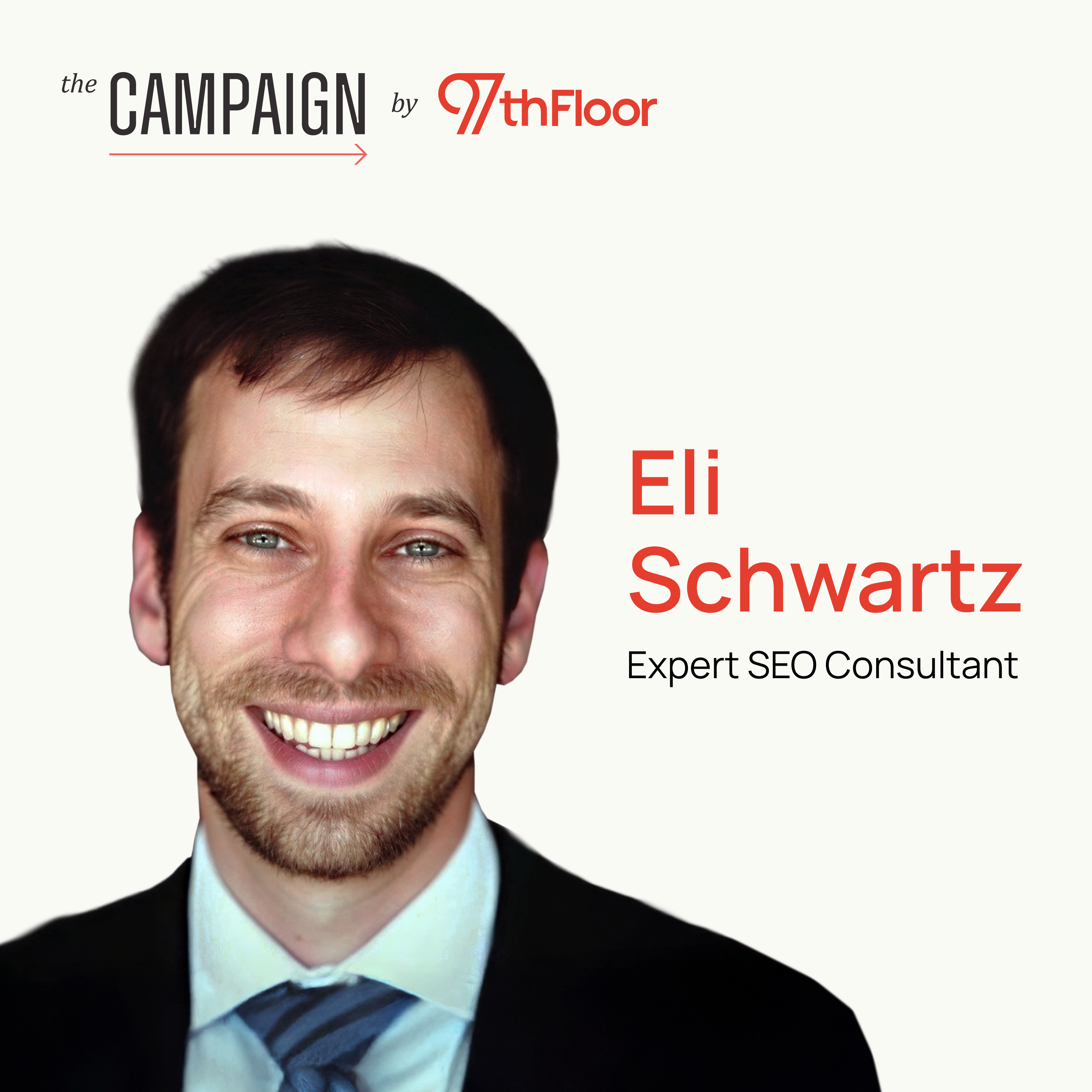
Today's guest is Eli Schwartz, an SEO expert and consultant with over a decade of experience driving SEO and growth programs for B2B and B2C companies.
Eli's clients have included WordPress, Shutterstock, Blue Nile and Zendesk, all of which he has helped build global SEO strategies to increase organic conversions at scale.
[00:00:48] Speaker B: He's also the author of the book Product Led SEO.
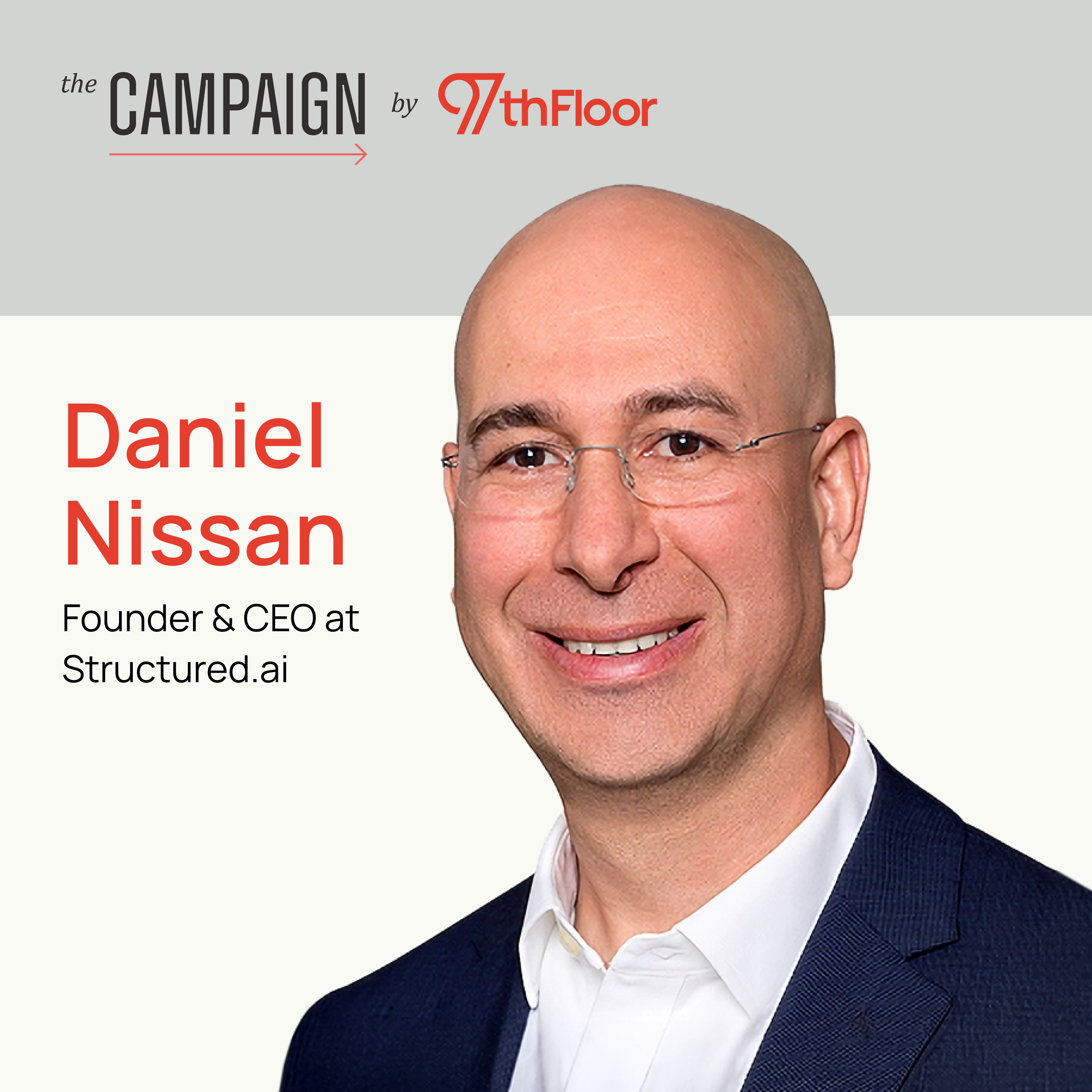
[00:00:52] Speaker A: In this episode, Eli breaks down how the Apple Gemini partnership means Google has actually won the search wars, why the thin content strategy from 2020 is dead, and how SEOs need to expand across every service people search on, from smart alarm clocks to car dashboards.
[00:01:09] Speaker B: Let's get into it.
Eli, thank you so much for joining us today. I'm excited to talk with you again.
[00:01:13] Speaker C: It's great to be here. Always good to see you. Pax.
[00:01:18] Speaker B: So I am excited to talk about a lot of the shifting landscape in SEO because a ton is changing and it's changing at a very quick pace, which is really exciting. But it means that us as marketers have to do a lot to stay on our toes to stay ahead of the game. So I think what a lot of the changing landscape is presenting is an opportunity for us to rethink some of our assumptions about SEO, maybe even what SEO is.
So how would you define SEO today? Like what are some of the things that you've noticed in the industry? People are thinking about the channel or the methodology incorrectly and how they could reframe that for better success.
[00:02:03] Speaker C: Yeah, I think a lot of people when it comes to SEO are just thinking too narrow minded. So, so you and I were just at CES in Las Vegas and I had a digital content creator pass, so media pass. So I got to go to this like media event before CES started where they talked about all the things that they were going to showcase at ces and what was so cool was there were so many surfaces that will have search plugged into it. But SEO people don't think and even just marketers don't think about these things. They're just like so narrow minded and focusing on phones, computers, you know, maybe a little bit of like IoT device but if you like, think about all the things that these hardware companies are pumping out, there's glasses, there's going to be contacts, there's watches, there's cars, there's robots. These are all things that are going to like, have surfaces people could search on. So if I really had to like create like the umbrella for SEO, it's everything, it's everything that has a surface that someone could conduct a search on, whether that's an alarm clock, which a smart alarm clock I can do searches on, which, you know, as of very, very recently is now powered by Gemini. So it's a functional search. So you used to always have these things where the best I could do is like, is it going to rain today? And now I could have a full conversation about like, what time it's going to rain and what should I wear and like, you know, all of these things, like, you know, AI.
So that's what SEO is. SEO is the role on the marketing team that optimizes for the searches that we'll be conducting on every single one of any service that people search on.
[00:03:41] Speaker B: I think it was just yesterday that Apple announced that Siri is going to be powered by Gemini.
What kind of impact do you think that's going to have or should have, I guess on the industry? Or do you think it will have any at all?
[00:03:58] Speaker C: So for the last, I guess two years, people have been promoting this idea that SEO is dead. And SEO is dead because ChatGPT is here and it, it changes the entire game.
And because ChatGPT changed the game, so now we have these other platforms like Claude and Perplexity and Grok that are also like ChatGPT and Google's the dinosaur and no one Googles anymore. So with this announcement from Apple, it really has me thinking that Google now controls the game. So Google has Apple, which is the largest distribution platform or second largest distribution platform after Google itself, now using Gemini, which means that Google owns all of search and can dictate what search will look like. So right now, search on search, regular searches, includes AIO reviews and AI mode. And Google has the luxury of deciding when they will have AI overviews and when they will put out AI mode and when they'll push you to Gemini because they effectively don't really have competition. Now ChatGPT and the others are going to steal a little bit of market share, but Microsoft takes a little bit of market share from Google and it's not really meaningful. So Google, it will be dominant. So when I think about like, what is the impact to the industry, it restores us back to where we were three years ago before any of us ever heard of the word LLM.
Search is Google. If you want to optimize for search, you want to pay attention to what Google's doing and I think that's the way forward. So when it comes to how you conduct yourself, focus on Google. What software do you use? Use the tools that have always been around like Semrush and Ahrefs and Conductor and a similar web that dominate Google. I don't know that you need another tool that only does LLMs. It's like having an, it's like really throwing all of your budget at some tool that only tracks like Bing.
Yeah, that wouldn't be wise. So I, I think that's the biggest thing that would come out of this is Google was the, the gorilla and they remain the gorilla in this industry.
[00:05:58] Speaker B: Yeah, I agree with that. I think Chad, CBT being the chief among them, they, they've a little overhyped in terms of adoption and I think there was massive adoption. But I think it was Rand Fishkin that shared a couple days ago some data that he found on usage and it was like this massive peak and then a plateau and then it's fall down a little bit which indicates like a lot of, you know, initial testing and trying and playing with it followed by a lot of reversion back to default behavior of just going straight to Google for most things. And you could probably argue that that is also encouraged with Google developing their own AI solutions to negate the need for some of the others popping in. So have you seen any data or anecdotal evidence on your end around like usage in Google versus these other LLMs?
[00:06:56] Speaker C: No, but like, you know, everyone I talk to, not hard data, but I talk to people when their experiences with AI are all within Google. So Google, I just updated my Chrome so I don't, I only update my Chrome when my browser crashes. So I don't know when this was actually released, but I now have Gemini in the corner of my browser. So Google's pushing AI everywhere and they're taking all those people that never really experienced AI before and they're going to experience it first with Google. They're also taking all those people that went to ChatGPT and they're like, stay home with Google. You're already logged in, we're already in your emails, we're already in your, your slides, we're already in your sheets, you can stay with us. And I, I think that's going to Be dominant. Now I am writing an article for my newsletter which will come out. I don't know when this particular one I'll be done, but I think the only company that can really challenge Google from a eyeball search distribution standpoint is actually Meta. And it's the company no one really thinks about. And the reason why is because Meta has distribution. So within big tech, there you have Google, you have Amazon, you have Apple and you have Meta. And of all of those, they all have distribution.
Apple now is tied up with Google, so they're not going to use their distribution to go and compete with Google.
Amazon, they also have distribution, but they are doing a lot of other things and they're actually powering all these things from behind the scenes. Meta, on the other hand, they have distribution. I think their daily actors are 2 billion users between WhatsApp, Facebook, Instagram and all the other stuff.
And they have the budgets to hire NBA salary level AI engineers, which they've done and we've heard about billion dollar engineers and they're working on llama. So if Meta decides that this is their future, they can do the same thing Google does, which is force all of their users to experience some sort of AI. And they're already pushing it strong. WhatsApp's actually the only platform there's I really spend time on, but they're pushing it stronger. So every time you do a search for a contact or conversation, the top portion of that is going to be an AI search, which again they could force on you a lot stronger like Google does. And now we have another alternative. So I don't know if Meta will actually choose to do this, but Meta's actually solved one challenge that very few other companies have done, which is monetization. So you've got, you know, Twitter or X. They never really built a great ads platform. Reddit has been been around for a decade. They don't have a really great ads platform. The only two companies that have built fantastic ad platform is Google and Meta. So should Meta decide that they want to start monetizing and you know, being AI player and not just a social network, they've got the ads platform, they have a fantastic ads platform. So they, they could monetize all that engagement. You do a search, they monetize it. OpenAI has, you know, made whispers and attempts at monetization, but I, I don't think their announcements that they're going to monetize means that they're actually going to solve it. They're many, many years behind Google Meta and you know, frankly, even TikTok. TikTok has an okay ads platform, but there's really very few good functional ads platform out there that agencies love to use and you know, find that they can find, find users without having to use the companies themselves to set it up for them.
[00:10:18] Speaker B: So if we were to, you know, talking about like stock picking, because in a sense that's a little bit the way we should be thinking about it from a marketing investment standpoint is like, where are you going to invest these dollars now to have an outsized return in the future?
And you know, I think one of the unacknowledged things, especially higher up on like the marketing side is an investment in Google as a channel.
You get the benefit often from many of the other channels by making that single investment.
So if, how would you recommend. So shifting to like 2026, how do you think brands should be thinking about and investing or should they be investing in Google as a channel and stocking, talking specifically organic search?
Yeah, I'd love to hear something like your predictions of what's coming down the pike and what they can start doing now to benefit later.
[00:11:22] Speaker C: So I, I mean, I have very strong opinions about how people invested typically in or in Google in general and organic search as a channel. I think a lot of companies, the way they invested was somewhat spammy. They wrote a lot of content and a lot of that content has now been replaced by AIs. And that is, that is, you know, had been the thesis. That was the thesis of my book that came out, I think now over four years ago, which is you want to really build your SEO around your users. You want to build your SEO around a product experience that drives people into your conversion funnel. You don't want to just write content for the sake of content.
So we're at an inflection point. And this inflection point means that we can't do things the way we've been doing it. So we AI is not competing with content, it's competing with thin content that you might have gone in upwork or fiverr to write or you might have hired someone for cheap to write just for keywords. I think that the playbook really has to change, which is we need users. There are users that are coming from organic search. We what are they coming from? What's the experience they're looking for that still exists? That is something that I would absolutely continue to invest in. But you can't invest in it the way you invested in it in 2020. You have to invest in it in the way that a 2026 user would be looking for it. And I think it's, you know, interesting when people are like, SEO is dead. And then you ask them how many searches they personally did that day. And of course, we're all searching. So the best way I would approach SEO is, you know, especially in 2026, is what does that smart user look like? What does that user who is aware of AI and probably uses AI frequently throughout the day, what is it that they're going to Google? And where can you surface your own brand that you can capture those searches and bring them into your buyer's journey? So continue to invest in Google, continue to invest in organic search as a channel, just not the way you did in 2020.
[00:13:17] Speaker B: I like that.
So how does content, let's say, look different? Like, more practically speaking, like, what is the. How does the playbook change in 2026 versus 2020? You know, you know, the 2020 is like, you mentioned the spam spray and pray kind of method. What does it look like differently in 26? Like, what does a user focus content strategy within search look like?
[00:13:45] Speaker C: Yeah, so I think that the content strategy in 2020, and probably up until the launch of ChatGPT or through the launch of ChatGPT, and still the idea of AI content became dominant, was listicles, or some sort of thin content, which you went onto Semrush, you went to Ahrefs, you went to Moz, and you came up with ideas of what you should write. So let's say someone's planning a vacation so you could write, these are the top vacation ideas for the winter in the United States. These are top vacation ideas for beaches. So these are all listicles. Now a smart user is going to begin that journey in AI, whether it's in AI itself, like Gemini or, you know, ChatGPT, or whether it's just AI overviews, which is, where should I go for the winter? And now you're going to get that listicle, but it's going to be AI written coming directly from the engine.
So that user does that search and they say, where should I go in the winter? And then AI will say, well, it's a very complex question. I don't know who you are. How much money do you want to spend? Do you want to ski or do you want to go into a heated pool? Do you have a family or do you want to just go by yourself? Do you want to go on a plane or do you want to drive? So now we're getting deeper into that and they can interact with AI until they get closer to what their decision is.
Now they move into the middle of the funnel. That's where SEO belongs. So we're in 2020. You can just say top winter vacations, go to Utah, Colorado and New Mexico. Right? And now that's very generic. You don't want to do that. You want to get very specific and say you've decided or AI helped you get to the point where you figured out how much you want to spend, where you want to go, when you want to go. Now, here's details, here's a personal, emotional article about why you want to go to St. George, Utah for your vacation. And these are the places you want to stay. Not because it's a list of goal, but because I'm telling you, my personal experience, that's SEO.
[00:15:42] Speaker B: So I imagine a huge component of that then needs to be these brands that have their products and services should no longer just optimize for, you know, the name of their product and service or specifically what it is they're selling, but also who it's for. And, you know, make sure the AIs are aware of price and when it fits. So that when it's tailoring these answers that it's, you know, basically hand serving your audience directly to you.
How, how? Like, tell me your, your thoughts philosophy on that.
[00:16:17] Speaker C: Yeah, I, I think we're getting to a world where online and offline collide, but not in a bad way, but in a good way. So the offline world has always been very, very specific. So you go into. I had an example that I wrote about on my LinkedIn recently where if you're looking for pizza and you really want good pizza, you go to a pizza shop, you don't go to a diner. Yes, a diner makes pizza and they also make salad. They don't make the best salad, they don't make the best pizza, they don't make the best burger, they just make it all.
That was what the online world became, which is we sell widgets and we're going to write a bunch of content rather than like, we sell this widget for this specific person and we convert well and we have high ltv. So therefore we're going to be the best for that person. Now, the reason why no one really did that is because the incentives in the industry were wrong. The incentives in the industry were, oh wow, you're ranking on a really high value keyword with a ton of searches and you get a ton of traffic rather than you look at all the sales you get. So if you're selling, you know, shoes for women, you don't need to rank on the word shoes. If you're selling shoes for toddlers, you want toddlers to come in or parents of toddlers to come in and know that you sell the best shoes for whatever reason, you don't need to compete with Zappos. So the online world has always been about, I do everything and I talk to, you know, founders of startups and large companies all the time and I try to explain this analogy to them that it doesn't matter whether you get the wrong traffic, you're not going to sell. You're putting effort into doing something you can't really do. Early in my SEO career, I worked at a vehicle review site called the Car Connection. And one of the keywords we ranked on before we got brutalized by the Panda update was the word cars.
So we lost that, but we were ranking, I think between 4 and 6 on the word cars and we got a ton of traffic. Now this was in 2010, and maybe in 2010, someone looking to buy a car, they were clueless, they went onto Google and they just looked for the word cars and they found the car connection and they read content and they spun up some ads and we made money and then they bought a car that would never happen in 2026. Now you're at the point where you're like, I want to buy a car. And you go through all these steps in the journey until you land on, you want to buy a Ford F150 and you know it's used and, and you know what features you want and you're googling for where do you find that and how much should you pay for that? And you know, what's the blue book value? All those specific things. You're not just be like, cars, give me cars and let, let's see where this journey goes. And that's the offline world. We don't walk into a store being like, I don't know, I'm hungry. Let's just see where the shopping cart takes me. So I think it's a good thing, I think it's a good thing that websites focus on who they're going to convert to and, and how they're going to best position their business.
[00:19:07] Speaker B: You've had some, you know, strong opinions around certain brands that should not be investing in SEO. And you and I, we, we hosted an event at, in Las Vegas, CS CES recently and there was someone, we won't say the brand name, but I am curious Your opinion? So they sell heavy equipment, we'll say, like bulldozers, that kind of stuff.
I'm curious, your opinion.
[00:19:36] Speaker C: It wasn't Boeing.
It wasn't the F35. We weren't talking about that.
[00:19:41] Speaker B: No.
What's the role of SEO for a company like that? I'm curious. Whereas, like, they sell heavy machinery.
[00:19:49] Speaker C: Yes. I love that question.
So if I were the CEO of this company and it's a public company worth tens of billions of dollars, I would never invest in SEO. Now, if I were the CEO of that company and someone told me that the SEO investment was going to cost me $1 million per year, and that is the electric bill for their factory for one day, I would be like, don't come to me and ask me to make decisions about a million dollars. Go do whatever you want. So that's the way I'd approach that. If you're a startup founder and you're resource constrained, maybe you shouldn't spend that million dollars. But. But if you're a big public company, like, who cares? Like, they sell one device, they sell one vehicle, one airplane, spend the SEO. So that's the way I approach it. I do, I think they're businesses that should never spend money in SEO, many of them, because if you go through that, the buyer's journey looks like, again, let's pretend it's Boeing and it's an F35. No one is googling F35. F35 near me. How much does an F35 cost?
No one's Googling that. But should they put a little money into having their website rank on F35 versus Wikipedia cares and you know, it's a multibillion dollar endeavor, so do it. That's the way I approach it. But if, like, you're a resource constrained startup and you're looking for where the best place to spend your, you know, your investor dollars or your own personal dollars on marketing and acquiring new users, I probably wouldn't do it unless it makes a lot of sense. There was a company I met, a B2B company in an IT space and I met the founder. They had been spending $10,000 per month on an SEO agency and they were frustrated and they wanted a different alternative. And they came to me to see if I could guide them and tell them if their agency was ripping them off. So I, I looked at their homepage and they had these fantastic brands on their homepage. They had like Dell and Coke and HP and the government and all these great brands. So I said I was on the, you know, zoom with three of their leaders. And I said, okay, where did, where'd you get HP from? They're like, well, I used to work at hp. Okay, great. Where'd you get Coke from? My brother is a VP of Coke and so I'm going through all of their logos and it was all some sort of personal connection, their classmate, their relative. So like, well, why don't you just like take all your SEO dollars and invest in more friends? Like all your best clients are coming from your personal network.
Nothing is coming from SEO. And like, frankly, if I go through your buyer's journey, I don't see a CIO going to Google to find a tool like yours. I see them going to their network. So take that money, make dinners, go to conferences, do something else. SEO is probably not a great investment. Now if this were a multi billion dollar company and they're spending $10,000 per month, do it. What do they care? Right? Like that's, you know, a night in a hotel for them.
[00:22:41] Speaker B: Yeah.
So the, a question that actually this person asked that I've been thinking about a lot, mainly because I didn't like my answer to it is he said, so if I want to get involved in AI search, what's the first thing I should do?
And I've been thinking a lot about my answer that and the reason I didn't like is because I think the first thing you should do is very dependent on your user and what they're doing and your situation, all that. And I think I should have responded with some more questions before answering. I did though. I liked your answer, which focus on measurement and I'd love for you to share that here. So how should brands be measuring success in this like AI search world where there's so much, you know, missing from analytics and conversion data, how should they be thinking about that measurement?
[00:23:41] Speaker C: So I think what a lot of people miss is really that the visibility that comes from LLMs is not measurable and will probably never be measurable unless Google is generous to us until it breaks it out in search console. But I don't think they will because it's expensive for them to figure out and there's no upside for them. So it's probably not going to be measurable. So then the way to think about LLM visibility is as a brand metric.
So you want to be visible in LLMs because it's good for your brand and if you don't deserve to be visible, then you probably won't be visible because again, this is all about offline branding another way I think about this, and this is something I frequently tell companies when I'm coaching their SEO managers, which is there are two kinds of SEO goals. There's an SEO goal where you're looking to drive bottom line value to the company.
You're driving acquisition, you're driving revenue. That's very important. This is a marketing channel. And then there's a second SEO goal which is sort of a mushy emotional goal, which is the boss likes to Google their brand on the way to the office.
If we don't show up, the boss is mad. So it doesn't matter that you'll never get a conversion off that term or that prompt, but you need to be there.
So this is something I learned earlier in my career. I had a CEO who had been a past employee at Yahoo and he only used Yahoo as a search engine. And he came to me and he's like, I was googling. Sorry, I was Yahooing or this term and we're not there. And I did what I'm sure everyone watching this would do, which is no one uses Yahoo. So just go use Google and we're fine, we're there. We, we crushed it on Google.
And he was very frustrated and I didn't give him the right answer. And what he did was he called his buddies at Yahoo and he fixed it it. So we showed up and he was very proud of himself because he did SEO. And the thing is, is like that would have been a mushy emotional goal if I would have achieved that. No one but him in the world would have cared that we were ranking on Yahoo for that term. But he does and he was a CEO, so that's important.
So the answer I would give and you know, to a company like that we had in our event, there might be an emotional aspect to LLM visibility.
Again, let's pretend it's Boeing and it's F35 plane. And the President of the United States wants to make sure that Lockheed or Boeing show up for F35 and not Wikipedia. Well then we do that. Even if you'll never ever be able to track a conversion back to that LM visibility that becomes that mushy emotional goal. So I think in every scenario there's those, both of those goals. There's what are you doing to drive revenue? And there's what are we doing to show that SEO is valuable?
[00:26:25] Speaker B: Yeah.
What about channel measurement?
Like something that we discussed at this event was, you know, direct traffic and branded search as like just curious on the.
You had A line about branded or advertising budget as it relates to AI. Would you mind sharing that, that thought again?
[00:26:56] Speaker C: Yeah. So I, I think a lot of companies are taking SEO budgets and they're allocating it towards LLM efforts, whether that's an LLM tool or LLM agency. And I think it's incorrect because again, the way I view LLM visibility is as a brand channel. I, I'm visible, but it's not measurable.
I think it's complimentary, or maybe not even complimentary. It's just a completely different channel to SEO. But it doesn't mean that you should take SEO budget. So if you had $10,000 a month for SEO, you should still have $10,000 a month for SEO. If you want to dabble with LLMs and visibility and agencies and tools that measure whatever you're doing. LLMs don't take the 10,000. Don't take any of the $10,000 from SEO, because that's still valuable. That's still something you should be investing in.
If you had to take budget from somewhere, I think it should be taken from brand. So not every company has a brand budget, but that would be where I would do it.
Again, this is a brand channel. It's not measurable. A lot of brand efforts are not measurable, especially, you know, spending time in the Bay Area. A lot of AI brands, they take out billboards just to take out billboards, so people know that they raised a lot of money. Not measurable. And that's what I would think of visibility.
Can you sort of back into direct traffic? Maybe you'd have to have a lot of traffic to really notice some sort of, you know, increase.
Could you back into brand searches again? Maybe, you know, again, you'd have to have a lot of brand traffic to really back into any sort of visibility. But other than that, it's going to be very, very difficult to track. So therefore, I think of it purely as a brand channel. Not trackable. So use brand dollars.
[00:28:36] Speaker B: I like that.
To, to wrap up. I'd love to hear. I mean, you're always playing around with AI. Is there anything on the like, work side any, any tools or anything that you're excited about using to help you with your, like, day to day?
[00:28:55] Speaker C: Yeah, so. So I find that the one thing I end up talking to a lot of companies about before I even get to SEO consulting is to really deep dive and understand who their users are. And I find it fascinating that most companies don't know who their users are. They completely make it up. So I'M writing a book which will eventually come out, which is called Customer Intelligence, which goes through a framework of how to find your users. And it's something that I've been toying with, building some sort of tool on how to find your users. So I think that companies that are founder led or sales led, they know who their users are. Most other companies really don't know. You know, going back to the example I used before on, you know, a shoe store, you like, you might say you're a shoe store, but if you dig in, you know who you sell shoes to, you know who your best customer is. And it's something that I find over and over. I met a company they do, I think car insurance or some sort of insurance online. And I said, who do you sell to? And they're like, insurance people that need insurance. I'm like, everyone? They're like, yes, everyone. I'm like, all states? Yes, all states. I'm like, who's your best? They're like, everyone. We just sell to everyone. And then I, I kept digging in until they're like, well it's females in the 30s that live in metro areas. Like so then why do you do anything not that, like that's your Persona. So if 80% of your conversions and it took me forever to get them to do that and they weren't even thinking about that, that's their ideal Persona.
Like once they knew that that's what they're focusing in on, that's the content they create, they know the problem set that that female in her 30s living in an urban area needs and what kind of things that she's going to google. So now you create the content around that. So I'm toying with vibe coding, a tool that can help get to that.
And then generally I love having conversations with AI about, you know, anything that I want to learn more about and you know, going like legal things, I'll just have like this deep conversation and that there is search like so I love looking at my own behavior and saying, well I just discovered this thing and then I google it and then I land on a website or taxes. So like we're getting to that kind time of year where I'm like, and figure out my taxes and just ask all my tax questions and then I Google stuff. So I become more savvy about what I Google. So it doesn't take away any of my actual searching. So, you know, big fan of that. What, what are your favorite use cases of AI?
[00:31:18] Speaker B: Oh, I, I love that we've been yeah, there's, there's been a lot. But I think probably my favorite that's had the biggest impact is we have a custom GPT that is armed with all of our processes, all of our case studies, all of our work, like everything that we do and then we use it to fill out RFPs, which I think is a, a blight on the, the marketing industry. Like the concept of RFPs, I just really hate them, but they've made them a breeze and like we've like had some pretty decent success with that. So that, that would be like my, our latest application that I, I really love. I love the focus on users. Like I'm, I'm finding that the more brands focus on users, which is marketing 101. It's very basic, but it is the rock. It's the foundation of all marketing. And I think a lot of the industry got lost in optimizations and tricks and tactics and all of that. And I get why. But the more that they can hold fast to that is who is our user, then that allows them to optimize in the correct ways and employ the correct tactics that will have the biggest impact. So I'm interested in that, in that tool. Whenever you get that finished, I'd love to.
Yeah, beta user.
[00:32:42] Speaker C: Oh, you are definitely going to be. Actually, I just pulled up my Gemini to see my last uses. I've got another one which is really cool. And this really underscores this whole idea that SEO isn't dead, it just changes. So I'm painting my house and I, I can't. I want to match paint and that's very, very difficult to do to figure out what the exact paint match is. There are some stores where you could bring a chip and they'll spectrometer it, but it's not accurate. So I've been using AI. So I take pictures and I use all them. So just to make sure that it's accurate. So I'm using Gemini first because I use Gemini mostly. And then I'll go to ChatGPT and then I'll do Claude and then I'll do Grok and then make sure they all agree and then I'll go to the store and get some test paint. Now that's the thing. That's that last step. I go to the store. So I need to paint. AI did not solve my, my need to paint.
But the store has no idea and the paint brand has no idea that I was brought down the bottom of the funnel to purchase that paint color because of AI.
So I think that when some people say, well, AI SEO is dead, the problem you were googling for or problem you were AI ing for doesn't go away. Just the shape changes. Like, Google just announced that you can do direct buying in AI, which I think is really cool. And it's interesting. When ChatGPT announced that everyone's like, well, Google's dead. Like, Google already knows how to do it. Google's actually better at this because Google has Google pay. Google has shopping. Like, they've had shopping and ads for years. They bring that all together. They're not inventing something, they're just putting in a different place. Whereas ChatGPT needs to sell it.
So with Google doing these kinds of things, we're now moving to a world where just the funnel changes and you're still buying, you're still getting addressed by a search engine. It's just a different query. Instead of saying, well, I, I need running shoes, you're now super specific about what you're doing and you're still buying it on search. It ends up at the same place. The bigger problem is not for websites. The bigger problem is for Google. So when you were like, I need running shoes. At all those stages in the journey as you discovered which running shoes to buy, Google was showing ads and getting you to click and they were making money. The websites weren't, might have been getting traffic, but they weren't making money because you're only buying one pair of shoes. You landed on one website to buy those shoes. Even if you bounce through Zappos and Amazon and Shoe City and every, every potential website, you still only bought one pair of shoes. So I think that's the thing, like, you have to really picture this of, like, what this journey looks like. The journey becomes smarter and more organized, but it's still a journey.
[00:35:27] Speaker B: Yeah, yeah.
I think famously this past couple of years, they're like the deep sea king crab fishing industry has been thrown on its head because all the crab moved and they don't know where they went.
But I think some of our industry is saying, hey, the traffic's down, it's gone. It's like, no, no, they didn't, they didn't disappear. You just don't know where they are anymore. You don't have the visibility. But it doesn't mean there's no, there's no king crab. They just moved, you know?
So, yeah, I think we need to better refine our measurements and.
[00:36:08] Speaker C: What we're.
[00:36:08] Speaker B: Dealing with is new baselines really effectively in, in the entire industry. And I think the faster we can adapt and, and invest accordingly, the better.
[00:36:17] Speaker C: Yeah. And I think the good news for us is, and the people that don't want to be at the cutting edge of this is that it's now harder and the people that do this are more valuable. Whereas used to have this point. Let's go going back to 2020, for example, where the, the measurement was I got traffic. So there are a lot of people that could write content and get traffic.
Now that's no longer a thing and will cease to be a thing. So it's not I got traffic, it's which artist, which agency, which genius is going to get me the sale that's coming from this and that's more constrained. You can't just go on upwork and say, make me money from SEO. You could go on upwork and say, write me content, brief me content. I don't know, create a pixel, build pages, make a cms. But you can't do this. This is much, much harder and still exists and will continue to exist and started our conversation. It's actually more complicated. It, it will exist on more interfaces. Again, that's something I saw at ces. Scary at CES is that there's like AI baked into everything. So at some point you're going to be like vacuuming, talking to your vacuum cleaner and you're going to like, there's again too much scary stuff that I don't even, I don't can't picture ever buying this. But like pillows with AI in it.
Those pillows you'll be able to talk to because why not, right? Like, if a pillow can detect you're sleeping and your stress, it's very easy for it to also have a conversation with you, with someone else's AI. So these will all now be search interfaces and more searches will happen and you need to be, you know, really optimizing for those interfaces. And unless the economy changes, unless the economy shrinks, all this buying activity will still happen. It just happens different ways.
[00:38:00] Speaker B: Yep, yep. To bring it full circle. Like you said at the very beginning, like, the role of the SEO should be expanding and we should look at it more holistically and it should not, should not be shrinking in this new, new world. I love that.
Eli, thank you so much for joining.
As always, absolute pleasure talking with you.
Where can people go to be notified when your new book comes out or, you know, learn more about, like, what you're releasing?
[00:38:31] Speaker C: My favorite place with, well, two favorite places really is going to be read my newsletter, which is@product led SEO.com so that you will definitely be notified of my book there and then of course follow me on LinkedIn. You'll be notified but the algo will decide if you get notified when you get notified. But productlet SEO.com I will certainly be notifying everyone when that is ready to come out. It's almost due so let's see if the editor lets me, you know, get another extension. It's almost done, but it's also due. Okay.
[00:39:01] Speaker B: All right. Sounds good. Excited for that to come out. Thank you so much for joining us today.
[00:39:04] Speaker C: Great to be here. Thanks pax.
[00:39:07] Speaker A: That's it for today everybody. If you enjoyed this episode, please consider leaving us a five star rating and subscribe so you don't miss future episodes. Huge thank you to Eli Schwartz for joining us today. You can find him on LinkedIn and at productled SEO.com you can also find past episodes of the campaign and examples of our
[email protected] there you can learn more about the agency and get in touch with a marketing specialist and to get support for your own marketing campaigns.
That's it for now. Thank you for listening. As always, keep innovating, keep converting.